November 25, 2005

Saint Catherine's wheel turning


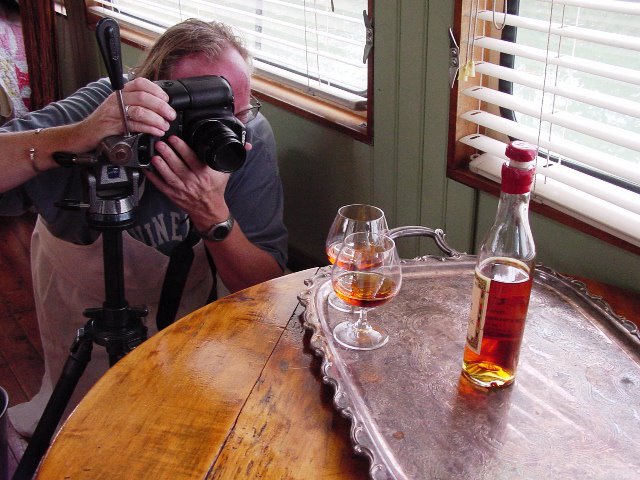
Tim Clinch on the job

As a 'Catherine' in more ways than one, I celebrate this remembrance day in a typically French way, by planting something. "Tout bois prend racine !" All wood takes root as I celebrate my name day by planting the seeds of a new project: a beginner's book of my France, an ABC of Gascony, and a primer for Terroir 101. A is for Armagnac. In these vanilla-scented old oak barrels, 400 liters of 15-35 year old eau-de-vie rests, evaporates, ages, colors and transform from a young virile hot brandy to a mature worldly bon vivant. This is part of the mythology of armagnac.


From grape juice to wine to brandy to nectar of the angels, it is in the cellar barns or chais of Gascony's modest farms that armagnac makes a slow transformation from a rustic Gascon moonshine to a world class liquor. This week, my good friend Tim Clinch, fab photographer and bon vivant himself, joined me for a romp across the Tenereze, the northern part of the Armagnac producing area and closest to home. We inhaled, tasted and swallowed, then tried to make little indulgent excuses to hide our delight in discovering that our favorite armagnac, hands down, was that of old Dubourdieu and his shambles of a farm.

Like the part des anges, the ephemeral alcohol evaporation that colors the stone walls, beams and even the roof tiles black with a drunken fungus, both Monsieur and Madame D. passed on this year. What they leave behind for their grown son to continue is as folkloric as the Dogpatch barnyard and kitchen at the end of a dirt road. Outside barrels rest against the barn, under a piece of galvanized tin, in the middle of the chicken run; Five-litre bottles with just a small tag reading 15 ans- 15 years, fill a wooden produce box next to the door; There are fifty bottles on the table of every size imaginable; more bottles are under the buffet, on the floor and climbing a staircase to heaven of old cardboard boxes. The fragrant chaos gets us giggling and we can barely nod oui as Pia serves us a generous pour of deep amber into simple brandy glasses. It was a cold late November day until the chill evaporated along with the part des anges. I learn the beginnings of terroir as I drink the earthy eau-de-vie and taste Gascony on my tongue. A is for Armagnac.
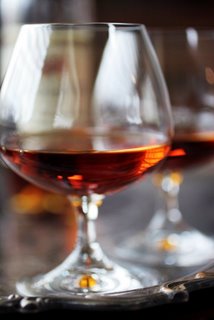
photo: www.timclinchphotography.com

October 18, 2005

Finding France

I sweep wisteria leaves from the terrace table, knowing the last of the French Kitchen classes for Fall are over. Winter sessions begin again in December just in time for foie gras-laden fetes, but now a call to culinary arms sees me packing bags and books and heading for Chicago. Vetou Pompèle and I are flying thousands of miles to cook a Soupe de Citrouille (a pumpkin soup with white beans and foie gras) for the Meals on Wheels Chef’s Gala, Sat the 22nd. On Friday, Vetou will be giving a demonstration on preparing Breton Gallettes or buckwheat crepes at CHIC (Cooking and Hospitality Institute of Chicago) and on Sunday I will be nervously giving the graduation speech to a too large crowd.

What do I say to 200 students who have diced and sautéed their way through hours of stainless steel kitchen classes? What do I say to the thousand family members who ponied up the funds, ate the homework and kissed the new burns better? “Where did you go to school?” they’ll ask. Knees knocking and mouth dry, I’ll have to confess that I learned to cook at my grandmother’s hand, scoop by scoop. First pasta and biscotti, then gnocchi as I adjusted my large palm size to her tiny one—a handful of flour, one egg and one tablespoon of water, the best pasta’ciutto dough is stiff. Long before I even had a passport, I learned how to find Italy as my Mom made anise cookies on Nona's flour-crusted waffle iron.

Later, in my Southwest France 'school', I learned how to distinguish the flavors of Gascony at the kitchen tables on my neighbors’ farms—traditional charcuterie, potager ripe tomatoes and golden fresh eggs. I learned the color and smell of really fresh food in the weekly markets where I shop and gossip and flirt. Jean-Claude the cheesemonger with a blue-eyed twinkle likes to chat but I have tasted the high pastures of the Auvergne in the Salers, Cantal and Laguiole cheese he makes me sample. Coming homewith market baskets overflowing, I drive along the swooping curves of a two lane road and study the newly-turned fields of this summer’s sunflowers, corn, wheat: chalky on the ridge near Nerac; deep chocolate here in the Garonne River valley; russet and gold where they plant the Armagnac grapes near Eauze. This is Terroir 101.

What shall I tell these new graduates? tired and broke new line cooks? pastry slaves? aspiring chefs? Easy. Now, you can start learning, watching, tasting, smelling. Now, you can find your own France whether you live in Chicago, work in Las Vegas or shop at the neighborhood supermarket. Now, you are ready to earn your FF—Finding France, a degree that might just take a lifetime.

photo:www.timclinchphotography.com

October 03, 2005

Slowing the spinning globe

Autumn days shorten and condense, a sort of intense reduction sauce of summer's French Kitchen activities. The keyboard is abandoned to the last garden tomatoes frenzy. Fall market tables crowd deep orange squash between dark, crinkled green Savoy cabbage. Color and flavor jump onto the french kitchen table. It is a favored time, this summer straw turning to fall gold.

Since I wrote last, visitors have come and gone leaving their green thumb prints on the potager as cooking students have learned about October's pumpkin soup, fearless butter pastry, and tender rabbit drunk on wine and prunes.

Since I wrote last, the wild mushrooms growing on the towpath have been harvested, eaten and reharvested again. We have drunk the newest wine, le bourru, and tasted the first promise of armagnac's 2005 vintage- fruity sweet juice, clean dry wine, waiting barrels that will exhale alcohol into celestial parfume--la part des anges.

Since I wrote last, the moon has come and gone and freshly turned fields are being put to bed under a dark Gascon sky. The cheminee has been lit, one friend grows a year older, and another marries in a Gascon wedding celebration that lasts long into the same dark night.

Before I write again, there will be new stories to tell, old recipes to refine and winter bitter greens to plant alongside the grape-hung arbor. I hasten to slow the globe before November's dark days arrive so that I can remember these sweet fall moments.