September 03, 2005

Grassroots movements a foot


Pilgrims on foot to Santiago de Compostello in western Spain stretch across many roads and paths here in southwest France. These are their last steps across gentle hills before arriving at the Pyrenees passes and the long stretch of one well-trodden route to the holy field of stars. I have longed planned to join their blistered ranks but the sacred daily living in my home sweet Gascon home keeps me focused on closer goals.

Just thirty minutes away from the French Kitchen a holy pilgrim site tumbles down an ancient river valley escarpment to a cluster of former fishermen houses called le port. This split-level village of Auvillar on the banks of the Garonne straddles the GR65 (Grande Randonnée soixante-cinq). Marked with the familiar red and white stripes, the walking trail follows medieval roads and tracks southwest across France—le chemin de St. Jacques de Compostelle. Auvillar, one of the plus beaux villages de France, is indeed a lovely stop along the long trail. In the upper village or alta villa, a coin-shaped grain hall shelters a modest Sunday morning market. Careful brick architecture arcades around the market place as artists, antique shops, a modern calligrapher, a very good restaurant and several cafés, a pottery and a bargees museum crowd the panoramic site. I often come to eat Serge Francois’ very good cooking at L’Horloge, but find myself spending more and more time at the bottom of the very steep road that leads from le port.

It’s been more than a century since the Garonne was navigable here, but the memory of an active fishing fleet and cargo port lingers: A house perched just steps from the shallow banks of the Garonne is called La Crue, the Flood; A newly restored building housing the Virginia Center for the Creative Arts retreat studios is called the Moulin a Nef in honor of the floating mill once anchored in mid-river; and just next door is the object of my particular affection—a tumble of flat Roman bricks supporting a solitary bell, The Chapel of St. Catherine du Port.

Beginning with just one piece of fruit, Priscilla Randall intuitively lives up to her initials and has generated a public relations plan sweet enough to eat. An American friend and renowned landscape architect, Priscilla lives across from the sad little chapel. She invited me to lunch one day to discuss her summer plan for helping save the 14th-century frescos now hidden in the decaying brick building. Too unsafe to enter, she shows me photocopies of the faint frescoes, early heraldry of the village, and a cross and anchor insignia in a rose window. If ever I could adopt a cause, it was this one! A riverside church for ancient bargemen named after my patron saint!

As crafty as a Yankee Tom Sawyer, Priscilla enlisted my help I think as as much to white-wash my soul as to paint the holy fence. Over a glass of delicious melon soup she had made from cookbook, P.R. managed to enlist me in helping launch a grassroots campaign to focus attention on the frescoed chapel’s deplorable state. She took me out back to show me her opening gambit. A makeshift fruit stand, offering a delicious tongue in cheek pèche effacente pêche—‘sin erasing peaches’. As close to selling indulgences as she could get. Each perfect juicy height-of-the-summer season pale pink peach was 65 centimes- a bargain for the dozens of weary pilgrims stopping to admire the history of the way as they stayed at the nearby gite d’etape. A modest contribution to their soul saving as well as to new roof tiles.

By nature, grassroots movements are slow but invasive. Priscilla’s personal efforts to engage the pilgrims in contributing, no matter how small the cost, has now led us to dedicate November 25th, St. Catherine of Alexandria’s feast day and the traditional time to plant fruit trees in France. I volunteer to cook a fundraising lunch when we a plant a tree to launch the serious "Several Thousand Euro Project" to restore the 10th-century building and it’s frescoes. From one peach to a one-hundred-Euro-a-plate lunch to the necessary paperwork and French grants is as simple a plan as putting one foot in front of the other to walk a thousand miles.

August 17, 2005

A French Odyssey

in the french kitchen at Camont


Cooks and their Kitchens marry in different ways just as basic ingredients do—sometimes with surprising results. Think of the magic combination of Prunes and Armagnac, Ripe Tomatoes and heady Red Wine Vinegar, Tart Lemons and Sweet Sweet Sugar. I am wed to my French Kitchen as a street puppeteer* is to her walking stage.

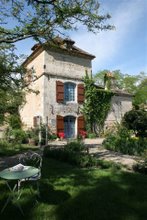
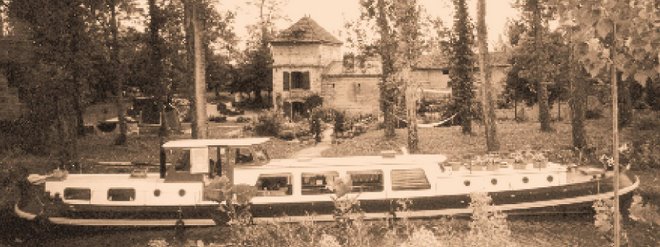
Last fall I invited England’s Rick Stein to step into my French Kitchen as he traveled down this Long Village of a canal. What started as a summer Gascon barbeque featuring enough Magret de Canard for a hungry group of Sur la Table travelers and friends turned into month-long cooking fest as Stein and Denham Productions put the finishing touches on their new fall series “Rick Stein’s French Odyssey.” This was more than a case of ménage-a-trois, it was an outright orgy as the 5-man/2-woman film crew moved into Camont’s 18th-century French Kitchen and I moved out. (The bistro-galley of the Julia Hoyt serves my daily needs anyway so no problem for morning coffee and I would spend the next three weeks eating leftovers, watching, learning and taking part in a real reality program I dubbed ‘TVdinners 101’) My cooking school setup magically transformed into the BBC TV set without moving as much as one confit pot out of place or changing the arrangement of whisks, graters and colanders that hang from the old iron butcher racks. I patted my back for having a theatrical eye and look for a new career as a set designer!

After three weeks of slicing, cooking, plating and filming, the crew celebrated a last evening’s dinner that I cooked over a glowing hearth as we toasted their success with a magnum of deep dark Madiran wine supplied by my wine expert friend, David Brown.
The next morning, the lights and equipment disappeared into the jam-packed Land Rover as my new TV buddies rode north to Normandy and awaiting ferries back home.

DuPont and I took an extra nap as the calm and quiet of Camont surfaced slowly and my French Kitchen returned to its usual cool and sturdy self. Just as DuPont marks his territory on every walk we take along the canal, I marked mine. I made a poule au pot, a pot of chicken soup, to reclaim the farmhouse cooktop, the battered cutting board, the brocante soup plates and scent the air with an authentic French perfume.

Tonight Rick Stein’s French Odyssey airs in the UK. I am sure there will be thousands of viewers watching as Rick helps them discover the secrets of good French cooking from the vantage point of our long and lovely canal while discussing the merits of vin ordinaire vs. Australian wines. Here at Camont, my friends and I will be filling our plates in the French Kitchen and discussing this years ripening vintage after a too hot summer, tasting lamb bought from a neighbor, eating tomatoes from the potager steeped in homemade vinegar and chin-dripping peaches plucked from the orchard for dessert. Reality or reality TV?

Camont- 1724- rental information

* My first metier was as a puppeteer and street performer!

August 04, 2005

Blackberry Summer


August descends like a nap… even this quiet Gascon countryside feels sleepier. While most of France (and Europe) heads to the beaches leaving the inland open spaces nicely vacant, my good friends know that this is the time to leave the crowded beach cafes, overworked seaside restaurants and tourist shops and come for a visit to this rural French Kitchen.


‘Camont’ is in its glory—the canal flowing by the foot of the garden, running springs under towering Ash and Oak trees, a swinging hammock, a funny rowboat, a vine-covered terrace and a weed overgrown garden bursting with tomatoes. In August, I am more inclined to assemble then cook: pluck, pick and gather, sugar, salt or freeze, eat raw rather than stew and stir. Tim Clinch and family arrive for a few days fun as we work on a new summer story for a Catherine Bell’s beautiful Dish magazine. Photographs of simple food arranged on the oak vat table sing summer: tomatoes of every hue and shape, charcuterie and fresh plucked radishes, a Salade Parisienne made with a slab of beef from my neighbor’s Blondes of Aquitaine, and a breakfast of fat scones with summer blackberries. We go to the market at Lavardac to buy perfect nectarines, small aged goat’s cheeses, a round of sausage to grill. Camont’s potager carré supplies the rest.

In the afternoon, the rowboat is pressed into service as Marigold, Bella and Felix gather from vines overgrowing the canal. I turn my hand to finding an old jar big enough to hold the harvest. A few handfuls of sugar, a squeeze of lemon then leave the jar in the sun for a day. Eh voila! -blackberry jumble to put on those golden scones.

photos by Tim Clinch