October 08, 2007

Cassoulet #3- All about a bean

The Hill Girls did a little retail therapy yesterday and found a few old books in a brocante yesterday.
  • A copy of Dante’s ENFER to send to Dario in Panzano,
  • An illustrated mid-century city guide forwarded by Jean Cocteau to "Paris- tel qu’on l’aime" that Stephanie will take back to Alaska,
  • A 1940’s cookbook for the French Kitchen.

This is what it said On Cooking Dried Beans:

Soak the beans for 12 hours in fresh water.

Strain the beans, discard the water and cover by double with eau de la source (spring water) or tap water with a pinch of bicarbonate soda added.

Add one whole, peeled onion with a clove stuck into it.

Add a bouquet garni (bay, thyme and parsley) and salt to taste.

Bring to a boil and then simmer gently cooking for 2- 2 ½ hours.

Taste one bean to see if it is tender.

I guess what struck me was that Time thing again. Let the beans cook, 2 hours, slowly. Kitchen Godfather Harold McGee tells us that time is the way to diminish gas problems, cooking beans slowly rather than changing the water. Buy the Book and read his wise words on legumes in chapter 9.

After the brocante shop, my visiting family and I hit the rainy day market in Nerac:

the first citrouille for 'alloween ,

a meaty guinea hen for roasting with armagnac sauce,

the meaty makings for the cassoulet (see next post!) and of course,

the famous le fast food carefully prepared by Jehann at the Ferme de Boue at Ste. Maure.


By now, I have three types of beans, the home-grown Tarbais, a kilo of the popular fresh plump Coco and un livre (a pound) of fresh Michelet, a common smaller oblong white bean. After a little shucking and gossip in the kitchen, I had 600 grams of coco and 270 grams of Michelet.

In the interest of economy of time and space (smaller pots), cover the fresh beans with double their measure of water, in this case, the bowl they were sitting in. Add just the simplest aromatic elements to the water (straight from my slightly filtered tap), a slice of ventrech demi-sel or half cured, lightly salted fresh bacon, a whole onion, a few sprigs of fresh thyme, one bay leaf and a shake of quatre épice* (in lieu of the proverbial clove stuck in the onion- my own Gascon touch) and salt (about a teaspoon) & pepper. Simmer gently. Uncovered or not. Yummy smells fill the galley.


The BEANS

les Cocos

In 30 minutes the Coco were perfectly cooked, tender to the teeth but still firm, they are thin-skinned and creamy like bean puree held together by pride and a very thin shell. They taste nutty and sweet.

Michelet

In 30 minutes, the Michelet were less interesting- both in texture and taste; their thicker skins separated from the firm meat that was more mealy than creamy. Without bothering further, I 86ed them from the Cassoulet Project and slipped them in a freezer bag and popped them in the new orange SMEG’s darling little freezer. They’ll make a nice addition to soup, a puree or something else later this fall.

Tarbais

After boiling the dried Tarbais about 5 minutes, I let them soak for an hour. The quick soak method HMcG recommends (heat and water rehydrating the bean skin and cell structure more efficiently) I then repeated the cooking process- onion, bay, 4-épice,salt & pepper. The Tarbais cooked for one hour and are still very firm. They were dried on the vine, perhaps over sun-dried and under-watered in the hot summer potager. However, they are large and meaty nearly twice the Coco size, flatter but with a thin that all but disappears in the mouth. Both beans are cooked to tender but will undergo another transformation lovingly described by Lucy de Lyon in her complimentary cassoulet dialogs.

So just as I did with the Coco, I turned off the heat and let them rest in their own juices. And then left the galley for a day of painting walls and other projects around ‘Camp Camont’. This is a rest day…for the beans.

Coco in the Pods

October 04, 2007

Cassoulet- Part #2- Tarbais Beans

Bean there, done that...


I am not going to brag, much, but Sue Kelley and I grew these sweet Tarbais beans this summer in the much maligned potager at Camont. We got just enough of a harvest for perhaps two medium size cassoulets, one for now to share with you all, and one for later this winter when the Garonne River Valley damp has seeped into every pore of the stone walls.


We caught these beans as they were drying on the vine twisting around the hazelnut stakes we tepee-d together. After a morning of weeding and starting to put the garden to bed, we sat and shucked. Beans freshly picked like this and before they are dry enough for storing can be popped into a freezer for no-soak cooking later. Tarbais grow as pole beans and traditionally were planted at the base of corn. Think of a Gascon 'three sisters'- corn, beans and French pumpkins. This was a test harvest and it seems that beans take to the heavy clay river bottom soil of this Potager, so spring '08 we'll plant a bumper crop of cassoulet-style beans.


Sue harvesting Tarbais

This is where the Cassoulet wars always start- the bean. It is all about the bean. After all Cassoulet is just a bean-based dish, plain and simple. Wonderful, onctuous, filling, and convivial beans. When considering the steps to take to make a decent cassoulet, please consider first, the bean. You can scrimp on the confit, swap sausage for sausage, add or not tomato or other 'trucs', but please don't ignore the prime ingredient- B. E. A. N. Beans cooked very slowly, with judicious seasoning- like a good soup (carrot, onion, bay, thyme, garlic) and a handful of savory and salted meat added is all that's needed to produce a good cassoulet. Stretched by a few leftovers bits of confit (duck, pork, whatever!) plus a sausage or two for the family table, cassoulet is the food of family gatherings, winter nights, and lively conversation.


Tarbais are now 'designer beans' and sell for a premium price of around 9 Euros a kilo. Not widely available even here (a few old guys grow them and sell at the Agen market), most home cooks in this area usually use the plump-as-a-little-pillows 'coco' widely available in their pods at a shuck it yourself price of just 3 Euros and 80 centimes. Per Kilo.


"Lingots" are another cassoulet bean favored by commercial sources and are widely available dried or already cooked. This jar of cassoulet came with "magret d'oie" or goose breast meat as well as a few sausages tucked in the bottom of the jar I bought at the supermarket. French fast food. But as you can see, it's lovely bean that will hold its shape yet melts in your mouth.

Choose your bean for texture- creamy, thin skin and flavorful, and size- and they should be large enough to stand up to bites of sausage or chunks of duck. Buy fresh in season or dried from good sources; an eight year old bean doesn't taste like much. And don't get lost in how strange, complicated and time consuming a cassoulet sounds. Learn to cook your beans well and the rest will fall in place. Ste. Paula (Wolfert) gives a fine account of tracking down THE Cassoulet in her essential "The Cooking of Southwest France". Having had the pleasure of eating in Daguin's kitchen for many years, her description of the famous Fava bean cassoulet made me smile remembering those meaty fresh favas, peeled and stewed with nutty duck confit. A thoroughly Gascon solution to winning any cassoulet concours hands down.

So choose your beans wisely.

October 01, 2007

Cassoulet 101- Part #1- Anatomy of a Pot

perfectly flared Cassoulet Pot from Not Potterie- circa 1988


deep

pouring spout


simple handles

well-used rough clay bottom

Cassoulet- this is part of a French Kitchen primer from my winter classes. Since I'm taking this step by step, and lightly- don't go getting too obsessive on me now; let me tell my cassoulet recipe in my own way. Like a good student- listen, look and then try it- your own way. Centuries of French housewives have made cassoulet without a written down recipe. But they did have three advantages over you- eyes in France, ears in France and best of all-- a tongue in France!

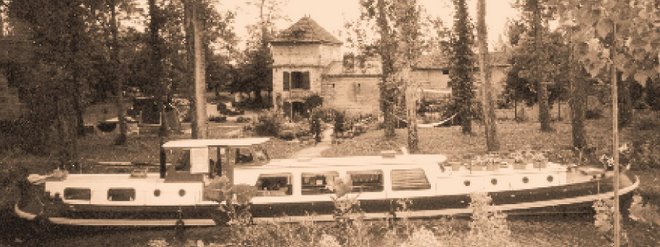
I learned to make cassoulet here in Southwest France that same way. I arrived one cold spring along the Canal du Midi on my barge, the Julia Hoyt. It was 1988. I was 37. Taking respite from strong Midi winds called the Tramontana, my mates and I bumped into the sheltered back port at Castelnaudary to moor up for a few days, weeks, whatever. We stayed some months.

This was my first taste of a truly regional dish. Here, on every shop sign, butcher shop, traiteur, and dedicated-to-the-bean "Cassouletier" was the same iconic emblem- a flared open terracotta pot with a double lip and small pouring spout- it's called a cassole. And this IS the home of Cassoulet. Before someone interrupts to tell me that Toulouse and Carcassonne like to compete for the 'best' cassoulet in the Southwest, tell me just where is the town with a water tower painted like a giant cassole? Yup, Castel-nau-dary.

It's actually very difficult to make cassoulet in Castelnaudary since half of the town does it for a living. Why go through all the bother when their are beautiful small shops, busy wood fired oven cafes and industrial kitchen factories dedicated to perfecting the recipe? One can stop in and order a 10-person, a 6-person or even a very generous 2 person cassoulet complete with perfect crusty top for a few centimes, francs, euros, or whatever is current. After paying a deposit on the take-out bowl, I'd cradle the full cassole on the back of my bike and returned to the Barge galley-- reheat in a slow oven, serve with a green salad and pour a bottle of big red wine from the Minervois. Eh Voila! A real authentic Cassoulet!

But as I left the the Grande Bassine along Pierre-Paul Riquet's curvaceous Canal du Midi, and was beginning to have C-withdrawals, I ran smack into the 'egg' of this recipe perched on the towpath by l'ecluse de la Mediterranean- at the vine-covered lock next to the Poterie Not Freres.

Since that long ago day, I have bought more than my fair share of hand thrown pots, water jugs, umbrella stands and garden urns from Aime, his Brother and Nephews. I have photographed, filmed, talked and coerced with a bottle of armagnac until I learned a few secrets, had a big picture and counted them as friends. But most important of all, that day, I came away with a simple cassole that would inspire my cassoulet endeavors for a couple decades- a thick-walled, hand-thrown clay pot with sturdy lip and pouring spout that could sit in an oven for hours and cradle the beans as they plump in their own juices.

People ask all the time "how to make a Cassoulet" but it wasn't until I headed to Italy this summer to do a little wood-oven cooking with La Diva that I had that 'Ta-Da' moment. The one where the slow burn of 19 years of cooking a simple peasant bean dish in the same pot finally transforms into a gastronomic surety. Time. Time, my friends, remains the too secret and often missing ingredient in a great cassoulet. Not just the 19 years of learning but time enough to slip a properly-made cassoulet in the oven overnight for tomorrow's lunch. Time to think about buying some nice fatty sausages (thanks Dario!) while shopping; time to soak the Tarbais beans I bought at the market in Agen and tucked in my suitcase; time to wait a whole week to cook la piece de la resistance. Then I finally placed the French pot on the spent ashes in the wood oven that had cooked and baked and grilled for an entire week. It was just enough time to turn the melting beans into a self-crunching crust- no breadcrumbs allowed.

Just like this story, you can't rush a good bean. Slow and easy. Now, for a more leisurely look at that clay dusted workshop on the Canal du Midi way back then... click on www.longvillage.com

Next... the beans.